
Hate paying extra every time you swipe abroad? You’re not alone.
Traveling as an Indian still comes with nasty surprises. Hidden forex charges. Cards that don’t sync with UPI. ATMs that swallow half your withdrawal in fees.
And the dreaded “dynamic conversion” that quietly drains more rupees than it should.
For Gen-Z and millennial travelers in 2025, these aren’t just minor hassles. They can ruin the trip. You want clean spends, smooth payments, and perks that actually matter.
No fine print traps. No guessing game at the counter.
That’s why the right travel debit or credit card is more than just plastic. It’s a toolkit for stress-free spending. A way to lower costs, unlock lounges, keep UPI working abroad, and dodge surprise charges.
Pick the right card now, and every trip abroad feels lighter.
What to look for in a travel card
Before you pick one, look at the basics: forex markup, annual fees, global acceptance, ATM costs, lounge access, UPI use, and travel insurance. These small details decide how much you actually save (or lose) every time you swipe abroad.
I never sign up for a travel card without checking these first:
- Low forex markup (0 to 3%): Regular cards charge 3 to 3.5% on every international swipe. Good travel cards cut this down to 1% or even zero in certain corridors. Over a week-long trip, that difference can save you thousands.
- Annual fee vs benefits: Premium cards may cost ₹2,500 to ₹10,000 yearly, but fee waivers, lounge visits, or travel vouchers often pay it back. If you travel less often, pick a no-fee or low-fee card.
- Global acceptance (Visa/Mastercard/Amex): Visa and Mastercard are the safest bets worldwide. Amex has perks, but it isn’t accepted everywhere. Always check coverage in your destination country.
- ATM withdrawal costs: Some cards waive ATM charges, but many add $2 to $5 per transaction plus local fees. Look for caps or waivers if you plan to use cash abroad.
- Lounge access perks: Premium credit cards bundle Priority Pass or free lounge visits. Debit/forex cards usually don’t. Check the number of visits allowed per year.
- UPI & RuPay compatibility: With UPI live in countries like Singapore, UAE, and France, cards that sync to UPI or RuPay wallets give you smoother, cheaper payments abroad.
- Travel extras (insurance, concierge, support): Flight delay insurance, lost baggage cover, and 24/7 assistance sound small until you actually need them overseas. Premium cards usually include these.
How I picked these cards
This list is built on both official data and real-world use.
I checked the updated 2025 terms and conditions for forex markup, annual fees, ATM rules, and lounge access, then cross-verified them against bank announcements and press releases for new perks, UPI tie-ups, and corridor expansions.
To see how these cards actually perform, I got myself into fintech forums, app reviews, and user feedback for red flags like blocked swipes, hidden charges, or refund delays.
Comparison portals and blogs helped me weigh them against competitors, while currency calculators showed the true cost of spending abroad.
The final list balances four categories:
- Low or no-fee options for budget-first travelers
- Public-sector and large banks with global reach
- Fintech-linked, UPI-ready cards for digital control
- Premium travel credit cards with perks and insurance
Every card included offers clear value to at least one traveler type.
A. Debit Cards: No fuss
1. HDFC Bank ForexPlus Prepaid Forex Card
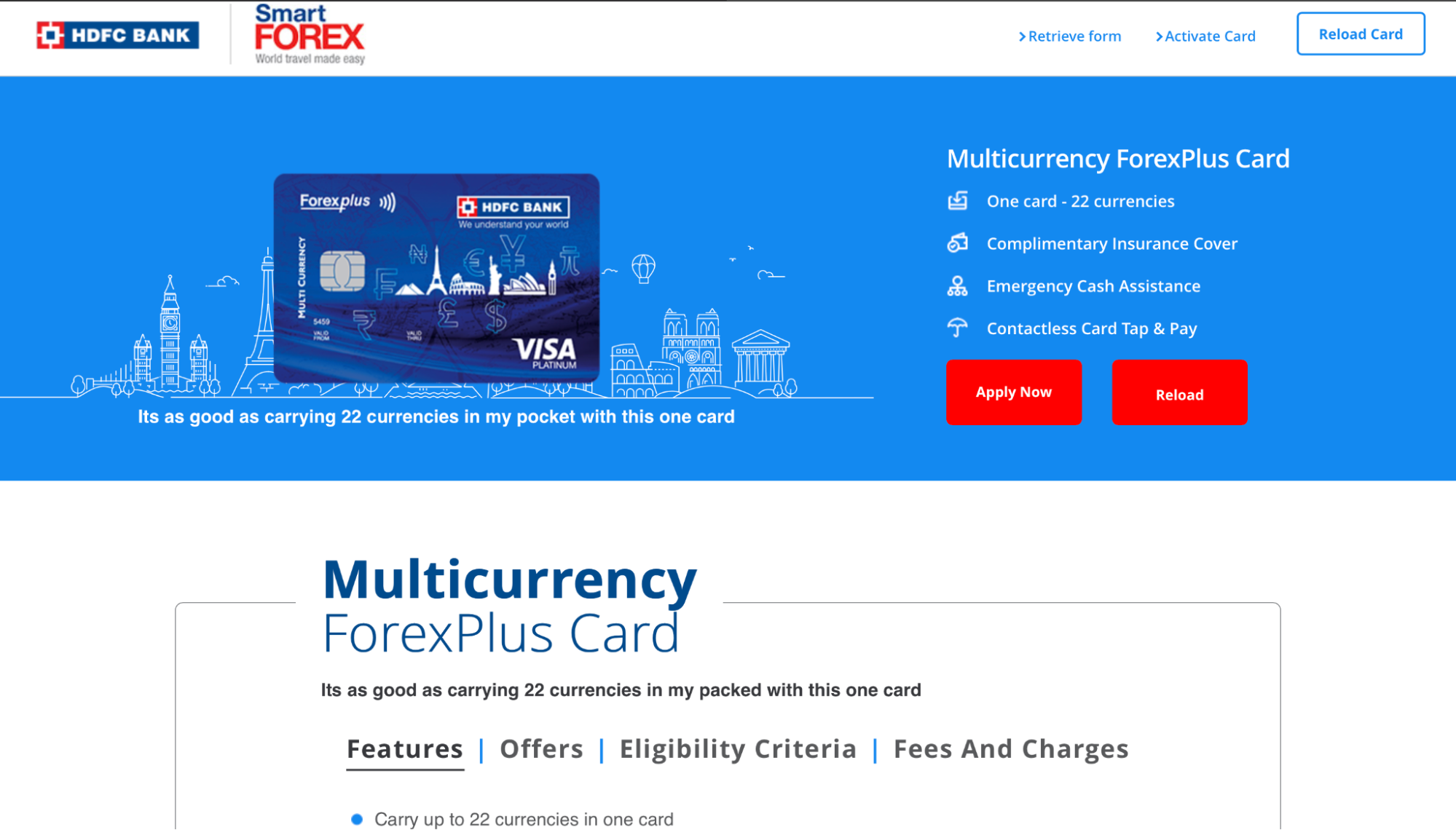
If you want predictable rates abroad, HDFC’s ForexPlus locks your currency at the time of load, with no surprises later.
It supports 22 major currencies, including USD, EUR, GBP, AED, and SGD, and comes with chip-and-PIN security plus contactless payments.
Reloads are easy through NetBanking or HDFC branches. Issuance costs ₹500 + GST, though select tie-ups may waive the fee. ATM withdrawals carry charges, with limited waiver offers available in 2025.
Best suited for card swipes rather than cash withdrawals, it offers stable, multi-currency access for travelers who want control over their spending.
2. Axis Bank Vistara Forex Card
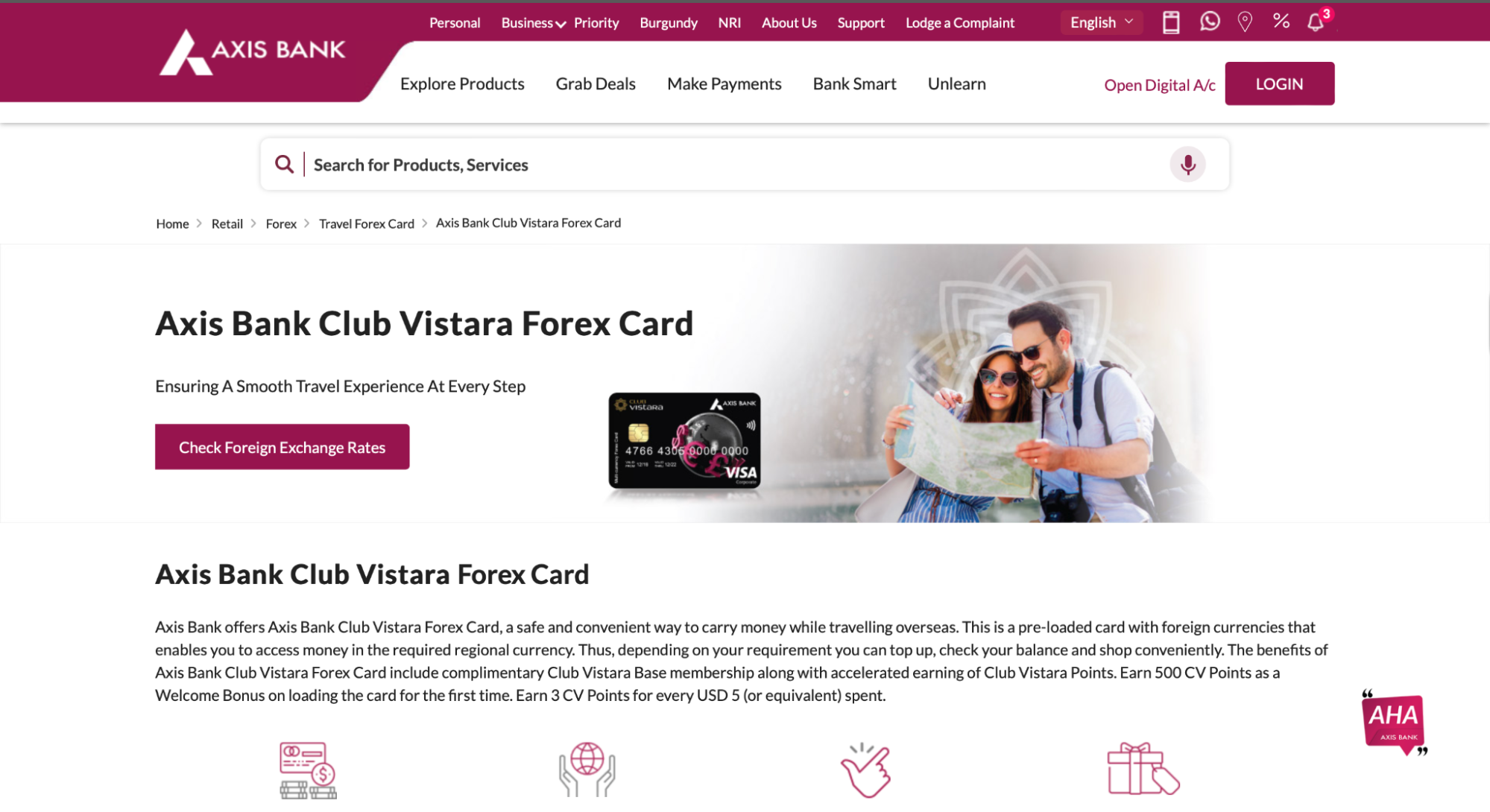
Perfect for Vistara loyalists, this forex card lets you earn Club Vistara points on your international spends while covering your forex needs.
It supports 16 global currencies, including USD, EUR, GBP, AED, and SGD, and comes with contactless payments at retail and duty-free counters.
Every first load unlocks 500 Club Vistara bonus points, and you keep earning 3 CV Points for every $5 spent abroad.
PoS swipes are free of merchant charges, while ATM withdrawals carry a $2.25 fee. Security is covered with chip-and-PIN protection, plus contactless tap-to-pay at duty-free counters and retail stores.
You also get TripAssist emergency support overseas. A solid pick for Vistara loyalists who want miles on international spends.
3. SBI Global International Debit Card (Visa Platinum)
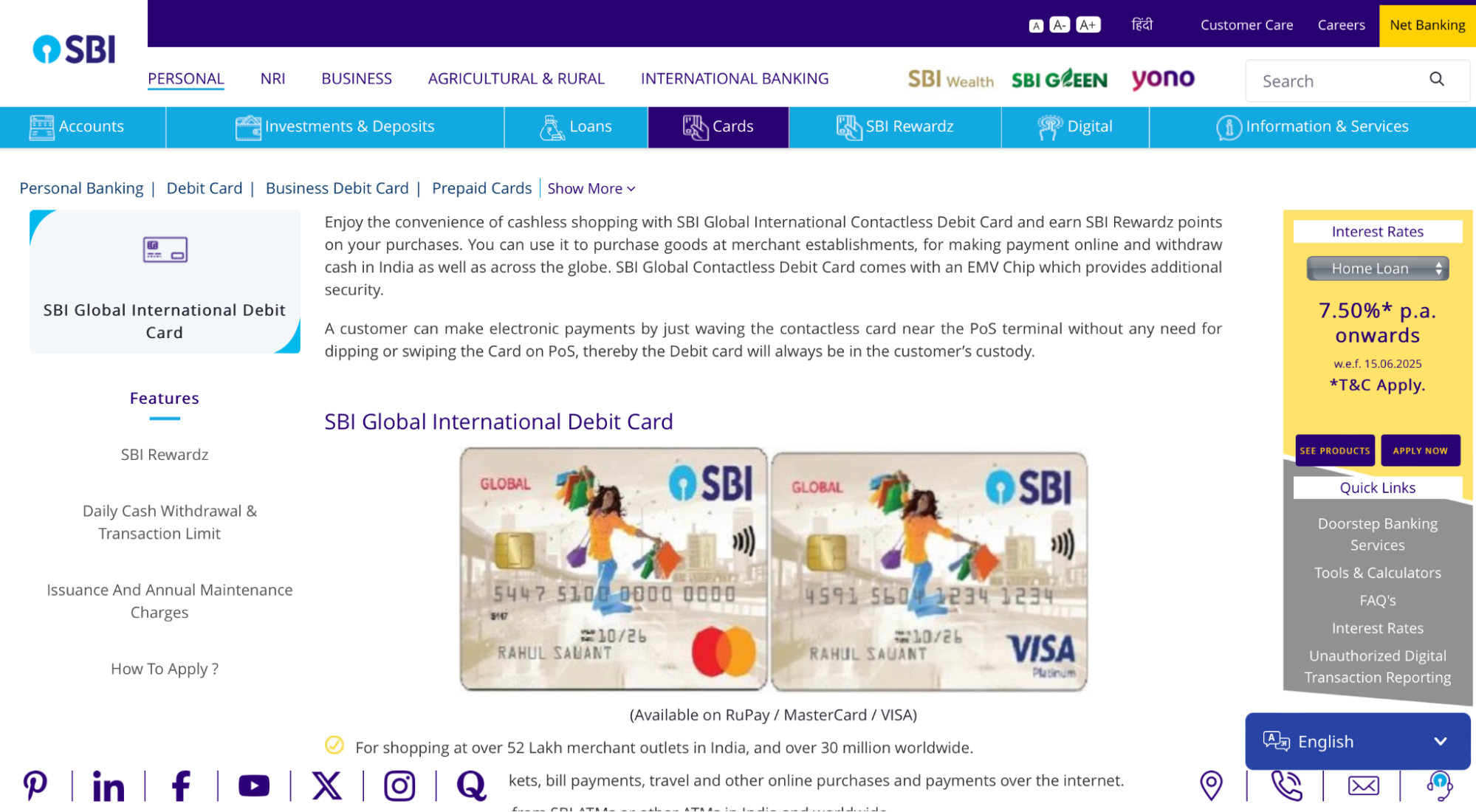
A no-cost entry into international spending, this SBI debit card works at over 30 million merchant outlets worldwide. It comes with an EMV chip and contactless security, and every swipe earns 2 SBI Rewardz points per ₹200 spent on shopping, dining, fuel, or travel.
When used abroad, the card allows ₹40,000 per day for ATM withdrawals or PoS payments in foreign currency. Forex markup is about 3.5% plus GST, which is standard for most Indian debit cards.
This card is best for budget travelers who want global acceptance and basic rewards without worrying about hidden charges.
4. Fi Money Travel (Fi-Federal Debit) Card
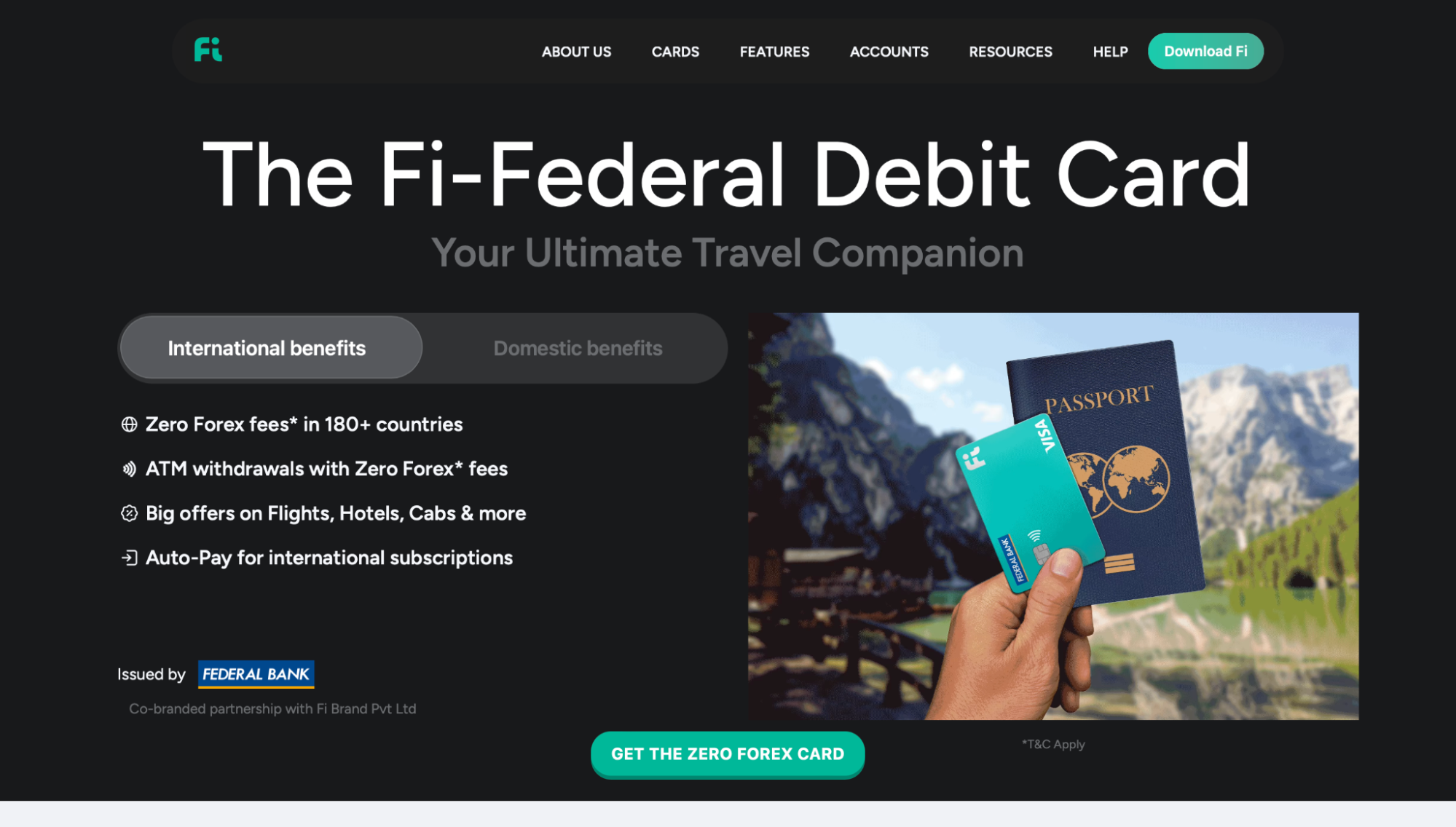
You can use the Fi Money Travel card across 180+ countries with zero forex fees, on both purchases and ATM withdrawals, depending on your Fi plan.
Otherwise, a 3.5% fee applies but is reimbursed within 30 days for eligible users.
Top-ups are simple via UPI-linked bank flows. You can lock/unlock the card instantly from the app, with controls to tweak limits.
It’s a Visa-backed debit card, accepted globally for both ATM withdrawals and contactless spending. Fi also offers 24×7 global support, making it a smart fit for digital-first, world-roaming Indian travelers.
B. Credit Cards: Rewards & Perks
5. SBI Card PRIME
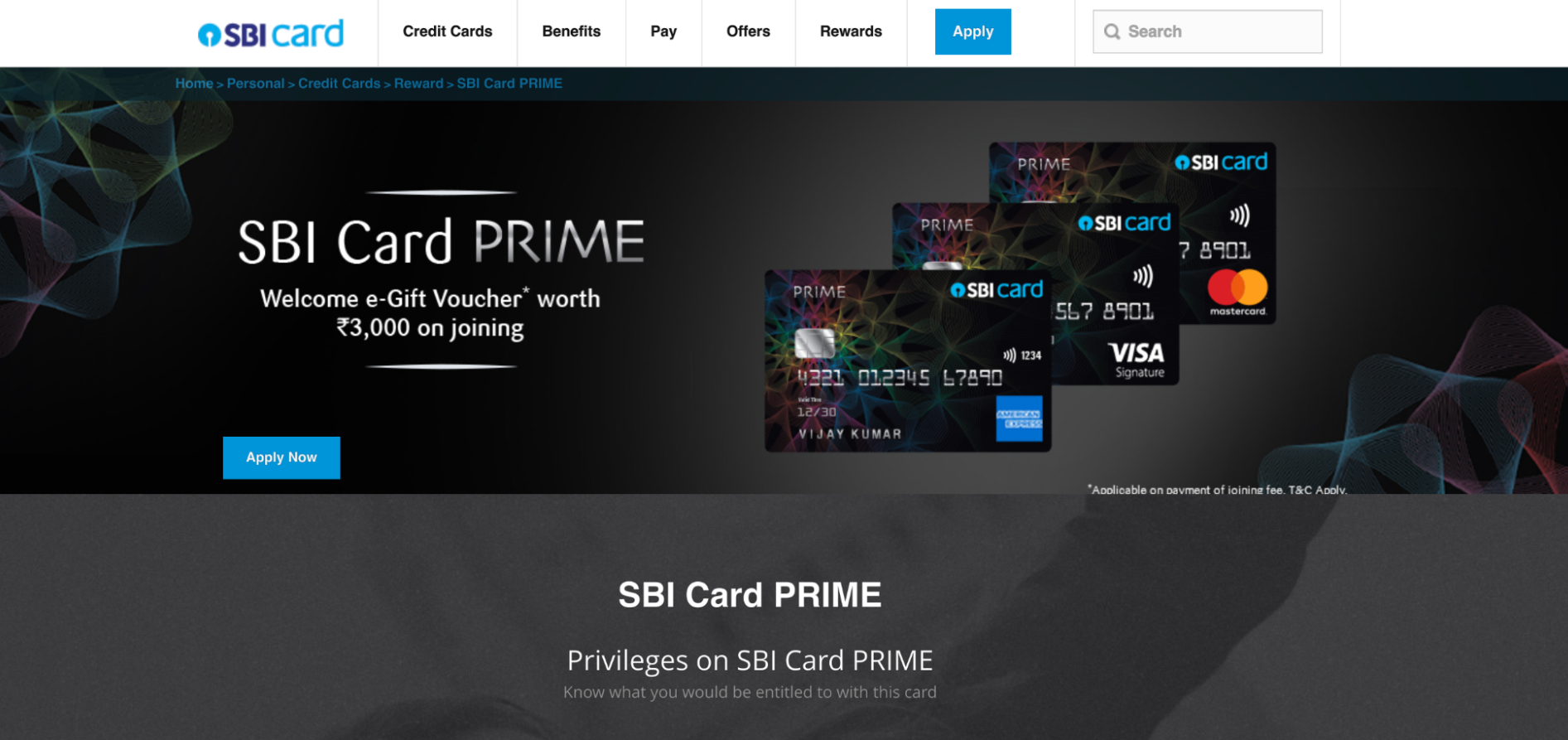
For frequent flyers who like perks on routine spends, SBI PRIME turns everyday purchases into lounge visits, vouchers, and big reward points.
It includes 8 domestic lounge visits a year, 4 international Priority Pass entries, and milestone vouchers worth up to ₹11,000.
Dine out, stock up on groceries, or book a movie, and you earn 10 Reward Points per ₹100. All other spends earn 2 points per ₹100. Add the 1% fuel surcharge waiver (₹250 monthly cap), and even filling your tank pays you back.
This card fits frequent domestic flyers who want lounge access, lifestyle rewards, and tangible value for their spending.
6. HDFC Bank Diners Club Privilege
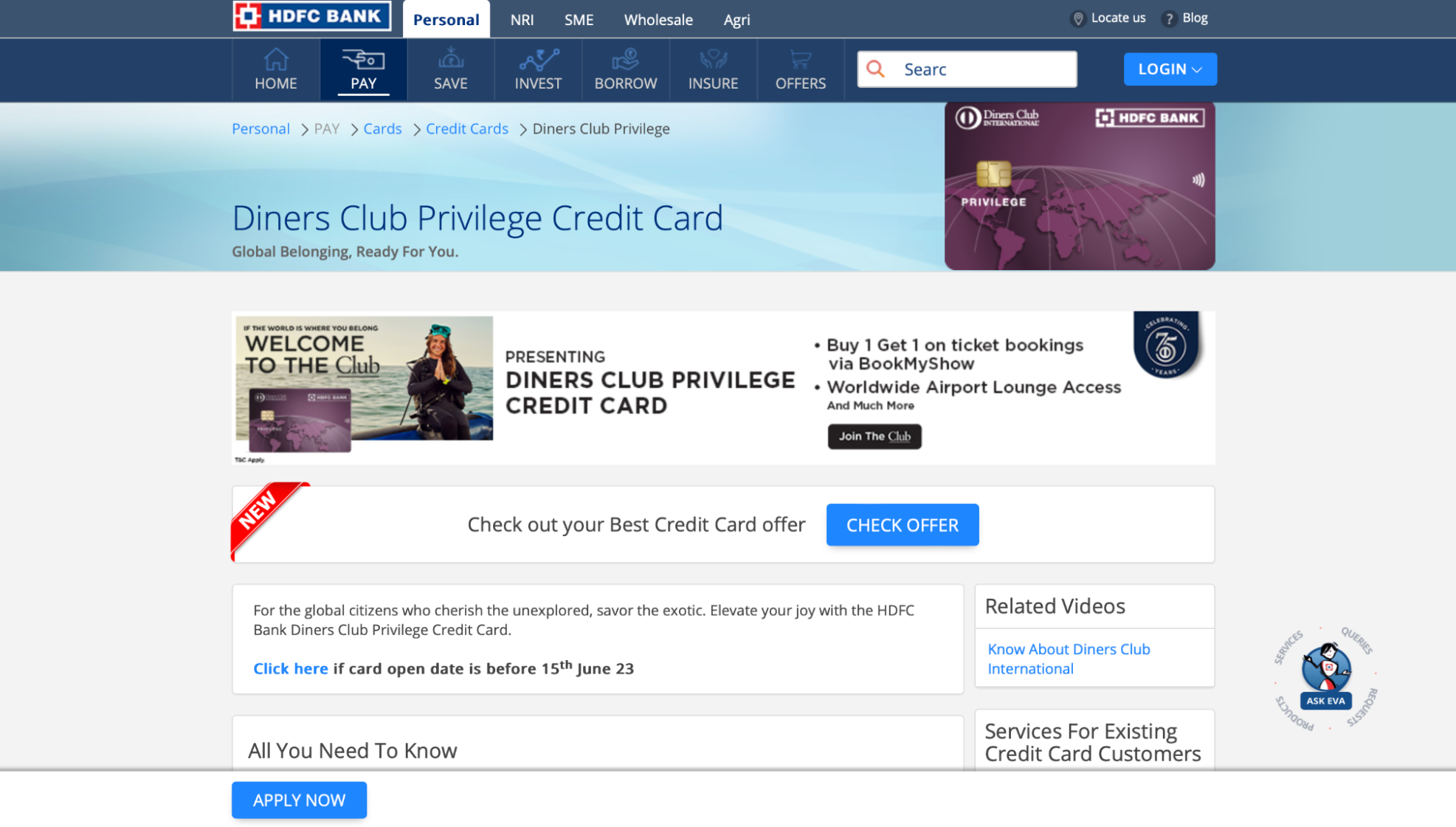
HDFC Bank Diners Club Privilege lets you enjoy 2 complimentary airport lounge visits per quarter worldwide (8 each year), making layovers smoother wherever you fly.
Hit spend milestones and you unlock lifestyle memberships like Amazon Prime, Swiggy One, Times Prime, and MMT Black, adding everyday value.
When you swipe abroad, foreign transactions carry a 3.5% + GST forex markup. Every ₹150 spent earns 4 Reward Points, and you can rack up extra points on SmartBuy bookings, dining, and Swiggy/Zomato orders (with caps).
Overall, it works as a practical mid-premium card, blending lounge access, rewards, and lifestyle perks into your travel routine.
7. Axis Bank Magnus
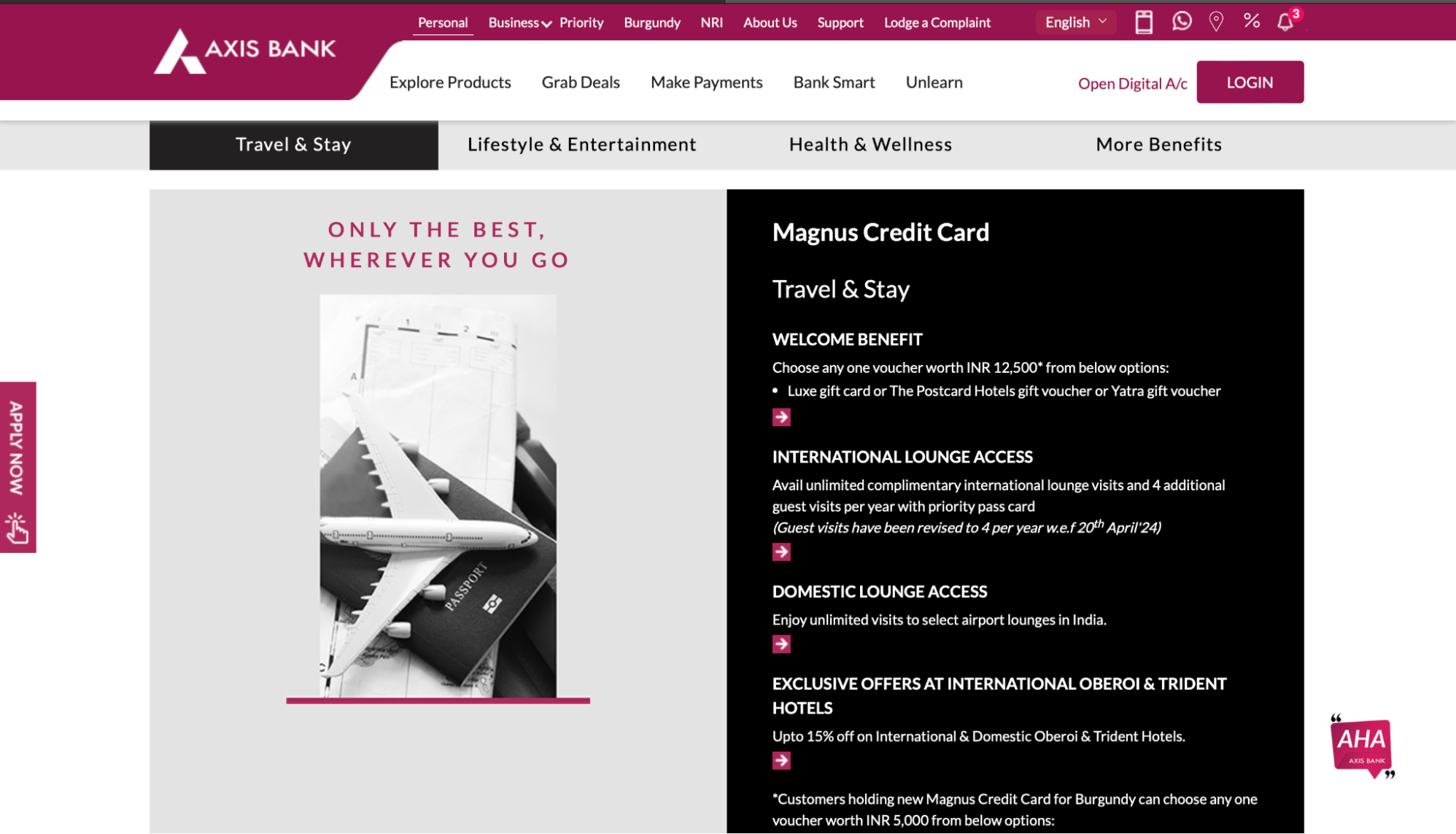
Built for heavy spenders, Axis Magnus packs in unlimited lounge access, luxury hotel perks, and a lower forex fee than most premium cards. It also lets you bring along guests with 4 free companion entries each year, making it a solid choice for frequent international travelers.
Swipe overseas and save with a 2% + GST forex fee, lower than most premium cards.
Cover the ₹12,500 annual fee easily if you cross ₹25 lakh in yearly spends. Add-ons like luxury hotel privileges, dining offers, travel insurance, baggage protection, and a ₹5 lakh credit shield give every journey extra security.
8. ICICI Bank Coral Privilege Credit Card
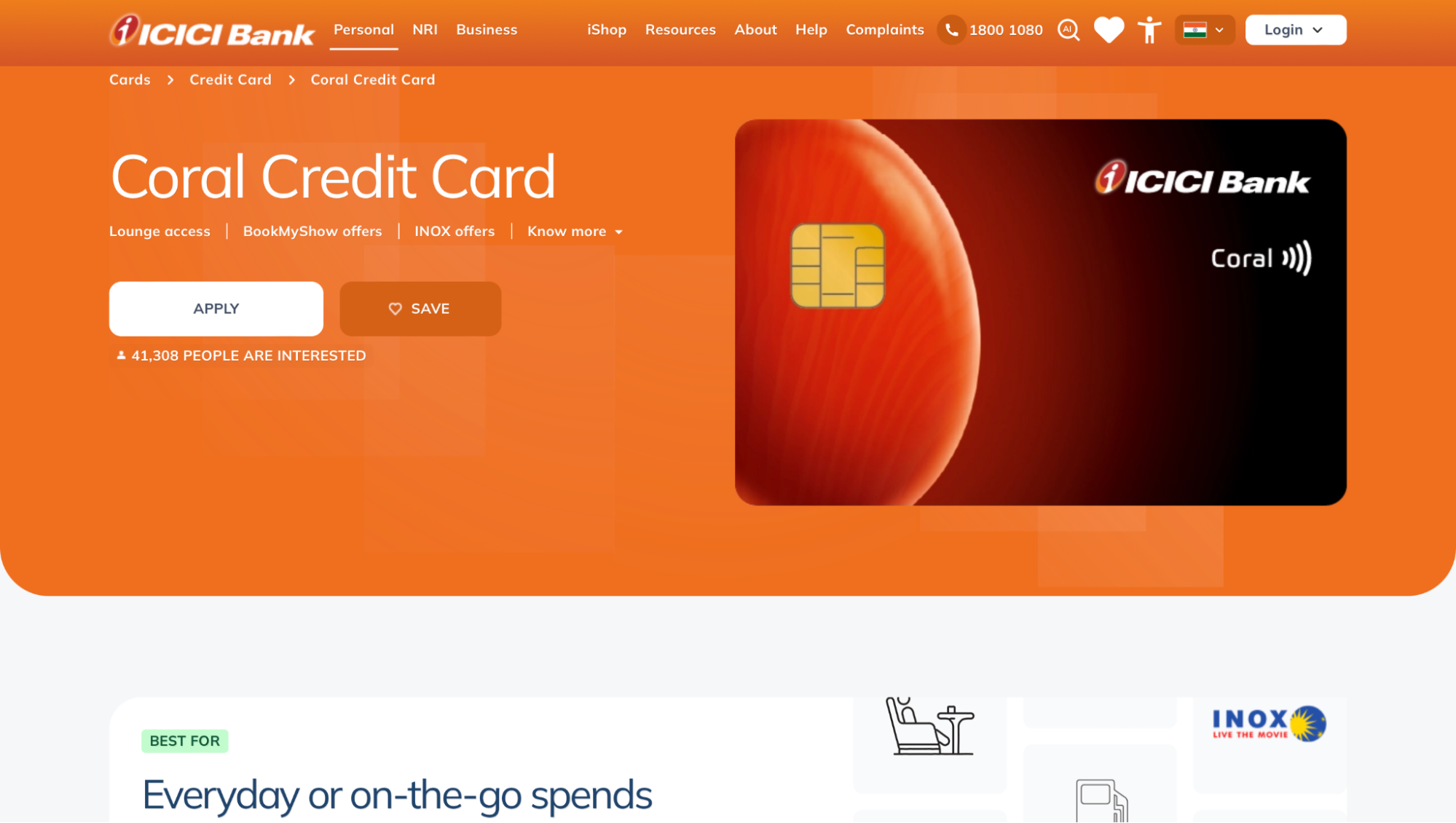
An affordable starter credit card, ICICI Coral adds real perks like railway lounge access, movie discounts, and milestone rewards without a heavy annual fee. The ₹500 yearly charge is waived if you spend ₹1.5 lakh, making it easy to unlock value on everyday purchases.
Enjoy 25% off on BookMyShow and INOX tickets twice monthly, plus a 1% fuel surcharge waiver at HPCL pumps.
Daily spends earn 2 Reward Points per ₹100, with milestone bonuses up to 10,000 points annually. Foreign currency transactions carry a 3.5% markup plus GST, standard for entry-level cards.
9. American Express Platinum Travel Credit Card
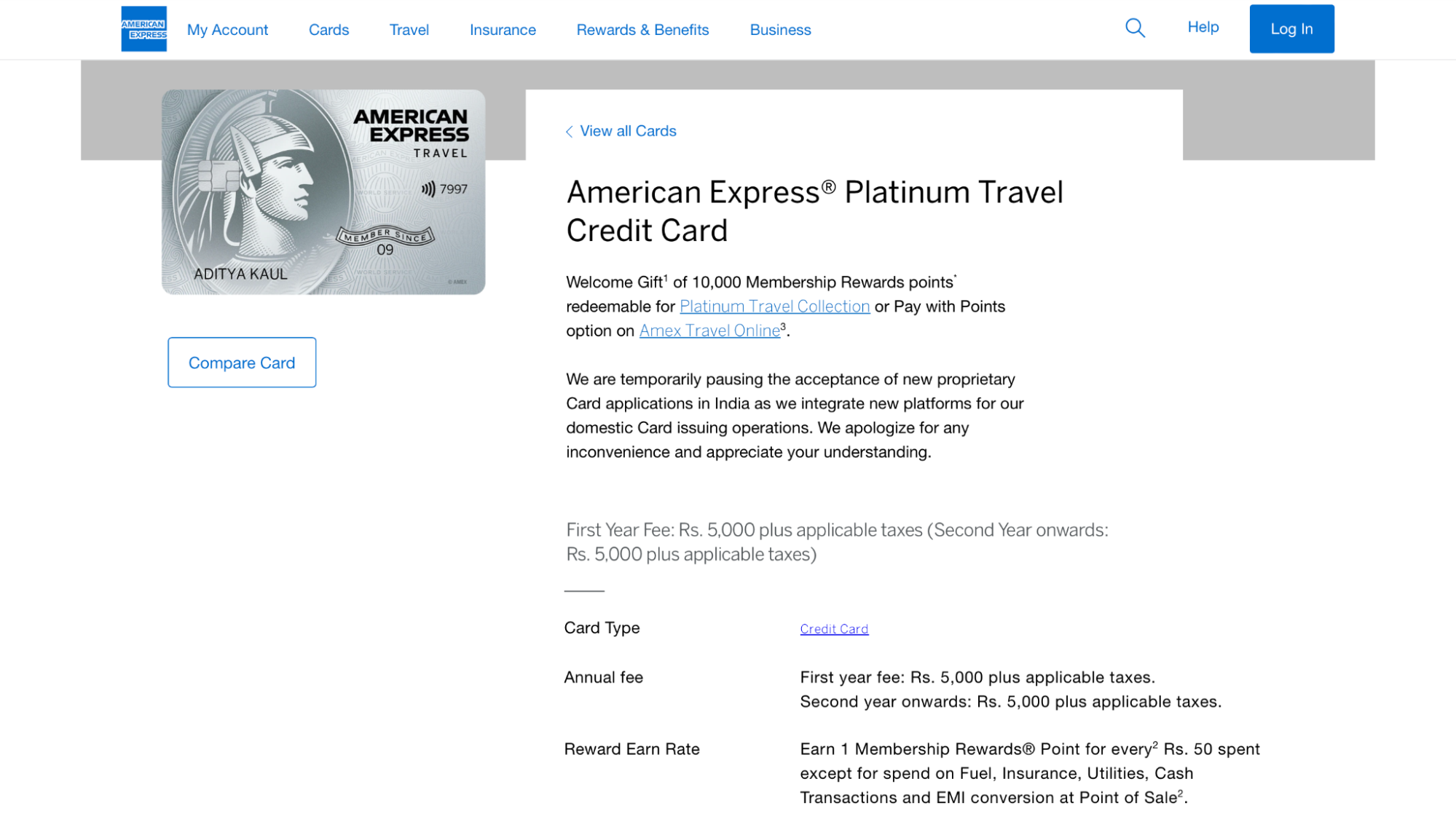
One of Amex’s most rewarding options for travelers, this card unlocks big milestone bonuses and Taj vouchers as you spend throughout the year.
A lifetime-free card built for online shoppers, Amazon Pay ICICI turns everyday cashback into a usable Amazon Pay Balance that never expires.
Prime members earn 5% back on Amazon, while non-Prime users get 3%, plus additional rewards on partner merchants and daily spends.
Rewards come as an Amazon Pay Balance with no expiry, usable anytime. Fuel up and skip the 1% surcharge at petrol stations. Accepted worldwide via Visa, so it works globally with a 3.5% + GST forex fee.
Quick Comparison Table
| Card | Type | Annual fee (INR) | Forex markup | UPI / App features | Best for |
| HDFC ForexPlus Prepaid Card | Debit (Prepaid) | 500 (waived in promos) | 0% at load (ATM fees apply) | Reload via NetBanking; multi-currency wallet | Predictable multi-currency spends |
| Axis Bank Vistara Forex Card | Debit (Prepaid) | ~300–500 | 3.5% | App reloads; Club Vistara points | Vistara loyalty + prepaid control |
| SBI Global Int’l Debit (Visa Platinum) | Debit | Nil issuance | ~3.5% | Works on UPI (linked to SBI a/c) | Budget travelers with SBI savings |
| Fi Money Travel Card | Debit (Bank-linked) | Nil | 0% on Fi Plus/Prime plans; 3.5% otherwise | Full UPI integration + app lock/unlock | Digital nomads + zero-forex travelers |
| SBI Card PRIME | Credit | 2,999 + GST | 3.5% | Mobile app support, not UPI | Lounge perks + milestone vouchers |
| HDFC Diners Club Privilege | Credit | 2,500 + GST | 3.5% | Mobile app support, not UPI | Lifestyle rewards + travel add-ons |
| Axis Bank Magnus | Credit | 12,500 + GST | 2% | Mobile app support, not UPI | Luxury flyers, frequent travelers |
| ICICI Coral Credit Card | Credit | 500 + GST (waived at ₹1.5L spend) | 3.5% | Mobile app support, not UPI | Entry-level perks + movies |
| Amex Platinum Travel Card | Credit | 5,000 + GST | 3.5% | Amex app tools, not UPI | Domestic flyers + Taj voucher lovers |
| Amazon Pay ICICI Credit Card | Credit | Lifetime free | 3.5% | Cashback as Amazon Pay Balance; not UPI | Online shoppers + daily spends |
Tips to maximize your travel card
I’ve learned that one card is never enough abroad. You always have to carry at least two travel cards and some local cash. If a network goes down or worse, your card gets blocked, you’ll thank yourself for the backup.
Before you fly, map out ATM networks in your destination.
Some banks partner internationally, and those ATMs waive or reduce withdrawal fees. Others hit you with a flat charge that eats into your budget fast.
Don’t leave lounge benefits to chance.
Many cards require pre-registration or even advance booking for access. So, set this up before your trip, so you’re not scrambling at the airport.
For smaller spends, like coffee, cabs, or metro tickets, lean on UPI or linked wallets where available. It’s quick, often cheaper, and keeps your main card free for bigger transactions.
The real trick, though, is in your rewards. Redeem points for flights or hotels whenever possible. That’s where you squeeze the most value, not in low-value redemptions like merchandise.
And here’s something many miss: watch the rupee.
Reload or convert when the INR is strong. Those tiny shifts in rates matter when you’re funding multiple trips a year.
Future-ready: UPI abroad, real-time FX, crypto & eSIM cards
The way Indians spend abroad is changing fast. Some features are already live. Others are still in pilots or niche use.
UPI abroad is the biggest shift. NPCI has extended UPI to Singapore, the UAE, France, Sri Lanka, and Mauritius. This means you can often just scan a QR code and pay directly from your Indian bank account. No need to load forex cards for small spends.
Real-time FX via virtual cards is emerging. A few fintechs show live conversion rates before each swipe. But adoption is limited. Most banks don’t offer it yet.
Crypto-linked travel cards are experimental. Some global startups are testing crypto-to-fiat spending. In India, regulation keeps this in trial mode. It’s not reliable for travelers today.
eSIM + travel card combos are being explored. eSIMs for roaming are common. But integrated packages that tie data and payments into one digital footprint remain niche.
For now, the safest bet is UPI’s global rollout. Keep an eye on fintechs trying real-time FX. Crypto cards and bundled eSIM-wallets are promising, but still on the horizon.
Which is the best?
Choosing the right travel card isn’t one-size-fits-all.
A solo backpacker may prefer zero-fee swipes. A frequent flyer will likely value lounge access. Digital-first travelers lean on app-driven debit cards. Value hunters chase milestone rewards.
The smartest strategy is often a mix. Use a UPI-linked debit card for everyday spends, coffee, cabs, and quick meals. Pair it with a premium credit card for flights, hotels, and lounge perks. Add insurance cover to that mix.
Always carry two cards and some local cash. Backups are essential when networks fail or a card gets blocked mid-trip.
So, which travel card do you swear by when you head abroad? Share your go-to in the comments; your tip might just help someone else travel smarter.
FAQs
Which travel credit card is best for Indians abroad in 2025?
It depends on your travel style. Axis Bank Magnus stands out for luxury perks and unlimited lounges, while Amex Platinum Travel delivers strong milestone rewards. For budget value, ICICI Coral or SBI Card PRIME works well.
Do any debit cards work well internationally for Indians?
Yes. Many debit cards work abroad if they run on Visa or Mastercard, and you enable international usage with your bank. RuPay is mostly domestic, though some cards now work internationally via JCB.
What is forex markup, and why does it matter?
A forex markup is the extra fee banks or card issuers add on top of the base exchange rate when converting currencies. It matters because it makes international transactions more expensive, reducing your purchasing power abroad.
Can Indians use UPI abroad?
Yes. Indians can use UPI abroad in countries such as Singapore, UAE, France, Sri Lanka, and Mauritius, as well as on select partner platforms. To use it, you must activate the UPI International feature in your app. Acceptance is not universal yet, but NPCI is steadily expanding UPI-INR worldwide, so coverage is growing each year.
Should I carry both debit and credit cards while traveling abroad?
Yes. Debit cards are useful for daily spending and ATM withdrawals. Credit cards are better for big-ticket purchases, lounge access, and insurance benefits. Always carry at least one backup card, along with some local cash, so you’re not stranded if a card is lost, stolen, or blocked.

Leave a Reply